AI dropshipping: what it does for your store (and what it doesn't)
«AI dropshipping» has become a label stuck on everything. Here's the concrete version: which parts of the work it genuinely saves you hours on, how DropAI does it, and what still depends on you.
1. Finding what to sell
This is the part that eats the most time. Instead of opening a hundred product pages and doing sums in a spreadsheet, DropAI shows every product with the cost, shipping to your country, recommended price and profit already worked out, and you can sort by «highest profit». Saw a product in a video or another store? Upload the photo: the AI recognises what it is and finds it in the catalog.
2. Building the store
No store yet? The AI builds one on Shopify: it picks a design, suggests brand names and writes the store copy (home page, sections and brand story) in your language. It's instructed not to make things up: no fake reviews, fake discounts or «only 2 left».
3. Importing products
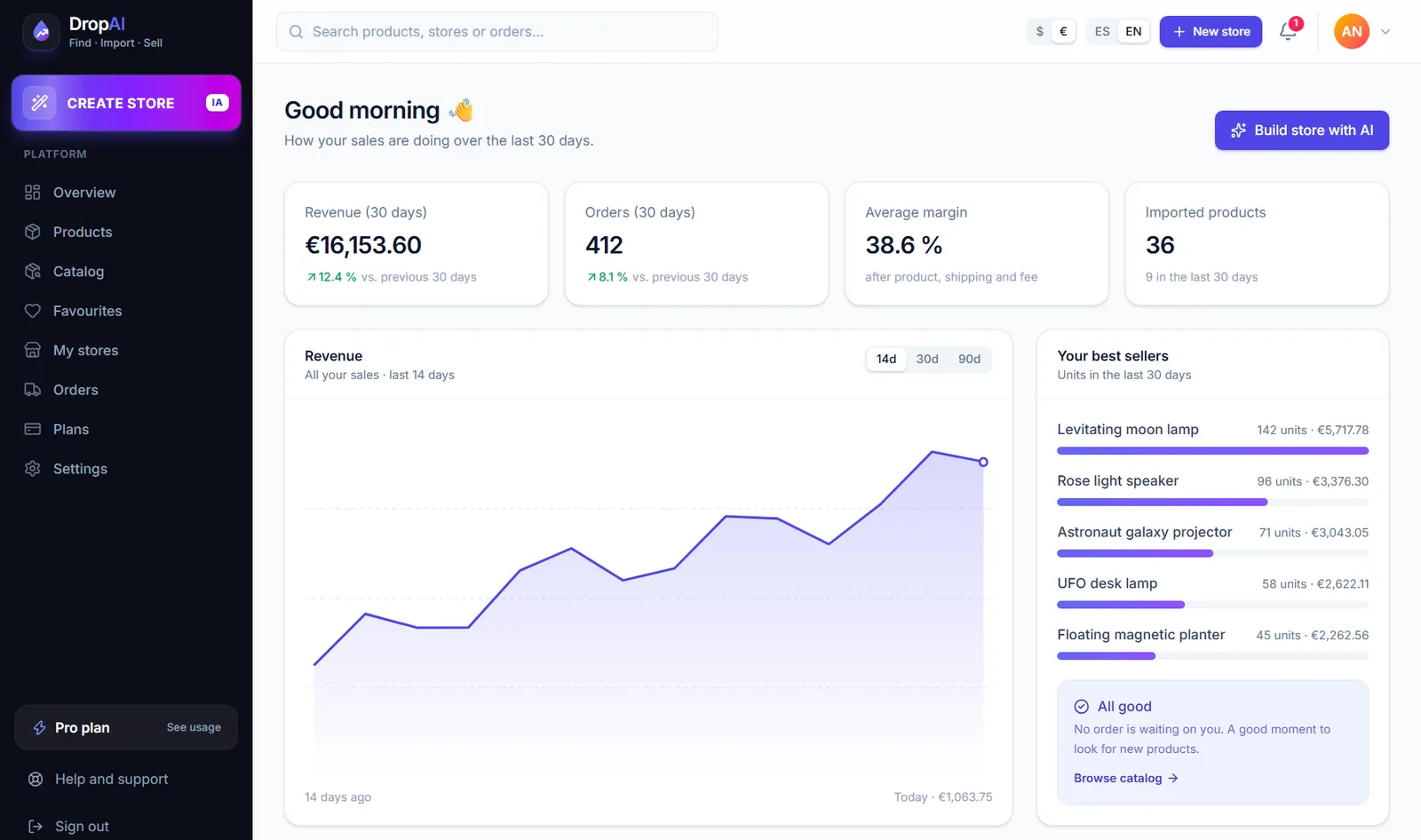
In one click the product goes to your store with its photos, variants and a name in your language, at the price you choose (a margin or your own price). If its cost changes, we let you know and recommend a new price to keep your margin; we never change your prices on our own.
4. Shipping the orders
This isn't AI, it's automation, and it's what really frees you up: when someone buys in your store, DropAI charges the order to your card, buys it, ships it to your customer and adds the tracking in Shopify. If an order has a problem, you get a heads-up.
What AI doesn't do for you
- Choose your niche: it gives you the data, but the call is yours.
- Bring visitors: ads, videos and social media are still your job.
- Talk to your customers: support is yours, though shipping notices go out on their own.
Be wary of anyone promising a store that «sells itself». What AI can do is take the hours of searching, calculating, writing and processing off your plate, so you spend that time on what sells: the product and how you show it.